
Christ the King
Today’s feast is one which most of our contemporaries, no doubt, have a hard time relating to. We give to Our Lord Jesus Christ the title of ‘King’. In truth, we are not the ones who give Him the title. He was called King before His conception by the Archangel Gabriel. As the heir to King David, the Messiah is king by right. Furthermore, as theology tells us, the hypostatic union, that is to say, the union of the Divinity with the humanity of Christ, is what ultimately makes Jesus Christ the king not only of individuals but also of nations and of the entire universe.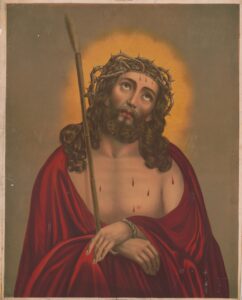
One of our problems is that we do not know by experience what a king truly is. The word evokes in our minds either medieval kings who lorded it over their people and made their lives miserable, or modern constitutional kings whose task is essentially to rubber-stamp whatever the people have decided in order to give them a symbolic unity. Neither of these models corresponds to what a true king is, and so are not helpful for understanding the kingship of Christ.
St Paul tells us that all authority comes from God (Rm 13:1), and St Peter tells us to honour the king (1 Pt 2:17). A true king holds authority from God in order to preside over the destiny of a people, to serve its interests by guaranteeing the safety of citizens, punishing evil-doers and allowing all to live in peace and tranquillity. Such is, in a nutshell, the temporal duty of a king. This obviously is not the kind of king Christ is, but it does put us on the right path in the sense that if we transpose these duties of a temporal king to Christ Our Lord, we are pretty close to our goal.
So what kind of king is he? St Augustine summarised it well when he said: “Christ is king to rule minds, to counsel for eternity, to bring into Heaven those who believe, hope and love.” There we have it. The kingship of Christ is destined ultimately to lead souls to Heaven by guiding them in this life to live in a holy manner, practicing the virtues that establish the soul in sanctity. This being so, earthly rulers have nothing to fear from Christ who, as the hymn for the Epiphany proclaims, “does not come to remove mortal kingdoms, but to give heavenly ones”.
So Christ is truly our King, our only sovereign King, and He wants to help us all live in such a way as to not miss the eternal kingdom in which His glory will be made known to us. In the book of the Apocalypse St John tells us of one of the visions he had of Christ in His glory:
Then I saw heaven opened, and behold, a white horse! He who sat upon it is called Faithful and True, and in righteousness he judges and makes war. His eyes are like a flame of fire, and on his head are many diadems; and he has a name inscribed which no one knows but himself. He is clad in a robe dipped in blood, and the name by which he is called is The Word of God. And the armies of heaven, arrayed in fine linen, white and pure, followed him on white horses. From his mouth issues a sharp sword with which to smite the nations, and he will rule them with a rod of iron; he will tread the wine press of the fury of the wrath of God the Almighty. On his robe and on his thigh he has a name inscribed, King of kings and Lord of lords (Ap 19:11-16).
This vision has a terrifying aspect to it. The Lord is here portrayed as a warrior doing justice and overthrowing enemies. But a closer look reveals a different reality. The weapons He uses are two: the preaching of the word of God, which, like a two-edged sword, pierces to the very marrow of the heart, unveiling our inmost thoughts (cf. Heb 4:12). It is the word of God that challenges us each day and makes war on our vices. This is why in the meditation on the Kingdom of Christ in the Spiritual Exercises, St Ignatius has us ask for the grace “not to be deaf to His call but prompt and diligent to accomplish His most holy will” (Sp. Ex. #91).
The other weapon He uses to overthrow His enemies is expressed when the vision of the Apocalypse speaks of His “robe dipped in blood”. That blood is not the blood of His enemies. It is His own. As St Augustine has already said so eloquently: ‘Christ conquered the world, not by iron but by wood’, the wood of His own cross. St Paul expressed this admirably when he wrote to the Ephesians: Now in Christ Jesus you who once were far off have been brought near in the blood of Christ. For he is our peace, who has made us both one, and has broken down the dividing wall of hostility, by abolishing in his flesh the law of commandments and ordinances, that he might create in himself one new man in place of the two, so making peace, and might reconcile us both to God in one body through the cross, thereby bringing the hostility to an end. And he came and preached peace to you who were far off and peace to those who were near; for through him we both have access in one Spirit to the Father (Eph 2:13-18).
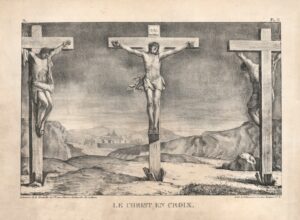
In other words, to establish His kingship, Jesus died for us on the cross. It is through the cross that grace comes to us to live in the presence of God. Since He is King, we can then speak of Christ’s style of governance. What is that style? He Himself tells us: A dispute also arose among them, which of them was to be regarded as the greatest. And he said to them, “The kings of the Gentiles exercise lordship over them; and those in authority over them are called benefactors. But not so with you; rather let the greatest among you become as the youngest, and the leader as one who serves. For which is the greater, one who sits at table, or one who serves? Is it not the one who sits at table? But I am among you as one who serves (Lk 22:24-30).
Is it possible not to be drawn to such a king? Is it possible to know how much Christ has done for us and not at least want to love him in return? In the encyclical Quas Primas, by which he instituted this feast, Pope Pius XI pointed out that no one in history has ever been or ever will be loved as Jesus Christ is loved. This is so true. No individual in all of history has so stirred the hearts of the masses as Jesus did and continues to do. He wins them over by His meekness, His gentleness, His kindness, His mercy, His desire to help by alleviating suffering and pain, by giving hope. He speaks words that transform the world and that even today continue to influence our godless societies. Words such as these: Love your enemies; do good to those who persecute you… I have come that they may have life and have it more abundantly.… What you did to the least of these little ones, you did to me…. Turn the other cheek… Take the last place…. Go the extra mile…. Do unto others as you would have them do to you…. Lend without expecting anything in return.… Give, and I will be given to you… Etc. Can any of us imagine what our world would be like had those words never been spoken? Or how any social peace could exist had we never heard Forgive us as we forgive?…
Is it possible not to love the Man who spoke thus? It is sadly possible, because we are forced to admit that many do not love Jesus Christ. That is a painful truth for any true Christian. It is so painful that St Paul made bold to say: If any man love not our Lord Jesus Christ, let him be anathema, that is to say, let him be cursed (1 Cor 16:22).
So the real question we need to reflect upon today is this? Do we really love Jesus? If we do, we have already entered into the Kingdom He came to establish even here on earth, but which will reach its fulfilment only in eternity. If we do not love Him, we need to know that His love will pursue us every day of our life. Like the Hound of Heaven, ‘with unhurrying chase, And unperturbèd pace’ (cf. Francis Thompson), He will hunt us down, seeking at every moment to conquer our hearts. As long as there is life in us, He will be after us until we relent, until we consent to leave the darkness of our vices and errors, and pass into the light of His kingdom. Until then, we are very much like those St John saw in this other vision: They will make war on the Lamb, and the Lamb will conquer them, for he is Lord of lords and King of kings, and those with him are called and chosen and faithful (Ap 17:14). May the Lamb conquer us all, and may we merit to be among the chosen and faithful ones in His Kingdom.