
8th Sunday after Pentecost
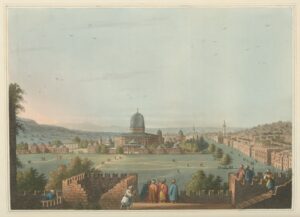
At the beginning of today’s Mass, we sang the verse from Psalm 47 joyfully: Suscepimus Deus misericordiam tuam in medio templi tui- We have received O Lord Thy mercy in the midst of Thy temple. This morning at Matins, we read about the awe-inspiring dedication of the first Temple of Jerusalem by King Solomon. That temple was one of the wonders of the ancient world. It was seven years in the building. On that joyful occasion, the Lord had assured Solomon: I have sanctified this house, which thou hast built, to put my name there for ever; and my eyes, and my heart, shall be there always (3 Ki 9:3).
It seemed that the future would be bright for Solomon and his descendants, for the entire people of Israel. But we know that it was not so. That wonderful temple would be destroyed some four and a half centuries later, and the people would be dragged off into a long and hard exile. Finally, the temple would be rebuilt, the one that would be visited by the Prince of Peace in person, but it too would be razed to the ground, as we shall be reminded in next Sunday’s Gospel.
In the fullness of time, the Messiah, the Lord Jesus, came to earth to build another Temple, which would be His own Mystical Body, composed of living stones who are the faithful sons and daughters of the Church. When we look at the history of this Church, the new Temple, the one that cannot be destroyed, we see certain similarities with the old. There are periods of prosperity and fidelity when the faith grows and spreads, when conversions are many, and souls are saved. But there are also the periods of decadence and subsequent trial, which often resemble the captivity in Babylon. We might ask ourselves: Why does this happen? Quite simply, for the same reason it happened to the Hebrews. Solomon had been forewarned: If you and your children shall turn away from following me, and will not keep my commandments, … I will take away Israel from the face of the land which I have given them; and the temple which I have sanctified to my name, I will cast out of my sight; and Israel shall be a proverb, and a byword among all people… (3 K 9:6-9).
What brings calamity upon God’s people is their sins, their lack of fidelity. And every time the Church is hit by any disaster, the instinct of her children should ever be to proceed to a serious examination of conscience. When evil seems to triumph, each of us has to ask ourselves how we have failed, in what we have not lived up to the dignity of our state of life. We have to be on our guard against spiritual blindness, which often has its source either in repeated personal sin or in failure to denounce it in others when we have a duty to do so.
In the midst of that tragic story, which is our story, God never ceases to be present. Just as He was with the remnant of the Jews in exile, when He sent them prophets to proclaim a coming time of mercy, so today, however mighty the forces of evil might be, however much we might feel inclined either to succumb to evil and compromise with it, or to spend our lives in mulling angrily over the darkness of the times, in the midst of it, I say, we must ever be mindful how blessed we are to have the truth in its fulness, to have the sacraments, while the temple of Holy Church still stands, and grace still reaches us. We are free to praise and to serve and to live the truth. And that should give us peace.
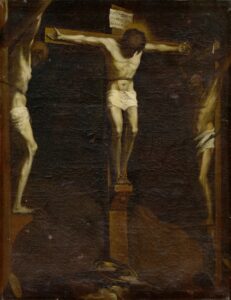
Blessed is he who is not scandalised in me, says Our Lord (Mt 11:6). When we are tempted in dark times to despair, we need to remind ourselves of these words. That Babe shivering with cold in sub-human conditions on a dark winter night in a stable for animals, that wretched naked worm of a man squirming with pain on that awful gibbet outside the walls of Jerusalem while the rabble shamefully taunts Him, that consecrated virgin stripped, mocked and violated by a good-for-nothing scoundrel, that most gentle and loving of priests beaten and left to die of thirst in the bunker of starvation of a concentration camp, that God-fearing man scoffed because of his love for and veneration of the traditions of Holy Mother Church, that simple priest, pushed to the margin and excluded for calling out the evil that is condoned in higher places: in all these cases and a legion of others, we need to remind ourselves: Blessed is he who is not scandalised in me. Blessed are ye when they shall revile you, and persecute you, and speak all that is evil against you, untruly, for my sake: Be glad and rejoice for your reward is very great in heaven. For so they persecuted the prophets that were before you (Mt 5:11-12).
We know that in the end God will triumph. We are on the winning team, provided we persevere and don’t jump ship. In the meantime, it is essential that we be on the right side of the struggle, and this is not a given. What is the secret to making sure we are on the right side, on God’s side? Today’s Gospel gives us a hint. In it through the parable of the unjust steward, Our Lord seeks to get across a fundamental lesson in our spiritual lives and in the life of the Church: it’s not because our supreme goal is life in the spirit and eternal salvation that we must not make use of our wits in the service of God and neighbour. Those words: the children of this world are wiser, should haunt us every day of our lives when we read of the still greater conquests of those who are on the side of evil. We know the extremes to which the promoters of evil go to push their agenda. And we also know in what lethargy are most of the children of the Church. Never at any stage in Church history have the saints stood by and waited for the parousia as if there were nothing else that could be done. Such an attitude is redolent of acedia, or spiritual sloth, and can be seen as the easy way out.
The saints don’t take the easy way. Whatever might have been the dire circumstances of their particular period in history, they rose to the task with a zeal and fervour all the greater in that the evil to be overcome was more vicious and seemingly insurmountable. They knew how to make friends of the mammon of iniquity, that is to say, they knew how to use earthly goods and talents, including their own mental and physical capacities, putting all to profit in the conversion of souls, the practice of charity to all in need.
What is the key to such a mentality? How did the saints manage to do so much good, even though they were no different from us, weak and hesitant by nature? It’s very simple. They took to heart St Paul’s words in today’s epistle: you have received the spirit of adoption of sons, whereby we cry: Abba, Father (Rm 8:15). God Himself has made us part of His own family. He has adopted us as His very own. He has given us access to His intimate life. If that is the case, then what can we possibly fear? If God be for us, who is against us? as St Paul says a bit further on (Rom 8:31). If we are truly the sons of God, then we have nothing to fear from the world, and we know that we will conquer in the end. Of course, as in any battle, some will lose their lives. They are the martyrs. But the fear of suffering or death never deterred a saint from doing the good that he or she was able.
What we must do then is fix our gaze ever more on Christ our Lord. Fear nothing. We are the children of God, and the measure of holiness of the children of God is God Himself. That measure is not attained by looking at ourselves, but only by looking at Him. Our Lord seeks adorers in spirit and in truth, and we must aspire to give joy to His heart by being among them.
With St Edith Stein, let us pray: Lord, let me walk without seeing upon the paths that are Yours. I do not want to know where You are leading me. Am I not Your child? You are the Father of Wisdom and also my Father. Even if You lead through the night, You are leading me to Yourself. Lord, let happen whatever You will: I am ready, even if You never satisfy me in this life. You are the Lord of time. Do all according to the plans of Your Wisdom. When You gently call to sacrifice, help me, oh yes, to accomplish it. Let me totally surpass my little ego, so that dead to myself, I may no longer live but for You!