Solemnity of St Benedict
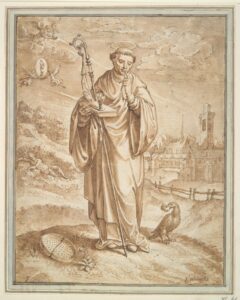
We owe so much to St Benedict. For obvious reasons. We are Benedictines. We strive to live by his Rule, to follow his teachings. We hope that when we reach the end of our earthly pilgrimage, we will be welcomed by him with open arms as true sons.
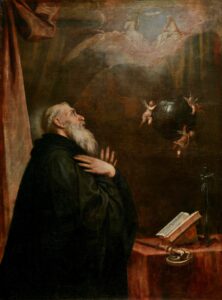
When people think of St Benedict, no doubt the image of the monk in prayer and fasting imposes itself. And indeed, those are certainly two hallmarks of any authentic monastic life: the will to pray, for oneself and for the world; and self-denial, the desire to make reparation for one’s past sins and to obtain the grace of conversion for souls who might otherwise be lost.
For St Benedict, the main form of prayer is the Divine Office, by which we glorify God with the very words of God every day and every night, offering Him the praise and adoration that most of humanity is oblivious of; it is a sort of vicarious intercession by which we stand and pray for those who do not even think they should. St Benedict is a man of the interior life. He encourages the monk to spend long hours pouring over the Sacred Scriptures, giving himself over to prayer of the heart with tears of compunction.
The main form of penance the holy patriarch has bequeathed to us is the common life, accepting not to be in control of our time, of what we do, of where we go, of bearing with the weaknesses and even faults of our brethren, of always being available for prayer and for charity, of working hard to provide for the community and the poor.
St Benedict is also an apostle. Tradition tells us of how, even in the early years of his solitude at Subiaco, he would instruct the poor shepherds who would come to him to be edified and taught about the ways of God. Later on, when he establishes his monastery at Monte Casino, the city set on the mountain, he will begin by destroying the idols that were there and teaching people about the worship of the true God. This double spirit of prayer/penance and outreach of an apostolate has marked all forms of Benedictine life throughout the centuries. For us, our principal means of reaching out directly to souls is through our retreats. These retreats following the Spiritual Exercises of St Ignatius are the most powerful means both of urging souls to conversion and helping them to share in the riches of our contemplative life.
We might also note that the monastic life, contrary to some common misconceptions, is far from being a flight from responsibility or a search for tranquillity. A true monastic vocation involves a willingness to take great risks. We see it in the life of St Benedict. There are several moments when he accepted a risk that could have, and sometimes did, involve some serious consequences for himself.
There was, first of all, the risk in leaving his comfortable position in Rome and the studies by which his parents had destined him to a respectable career. He took this risk, not knowing where he would go, but knowing only that he must get away from the world and serve God. It led him to three years of solitude and battling with the devil, at the end of which he was purified and made able to lead other souls to God. During that time, when faced with a grievous temptation of the flesh, turning his back on a life of pleasure, he took the risk of pain and threw himself headlong into the thorns that, while punishing his flesh, opened his heart to burn with love for God and for all men.
Then there was the risk of accepting to lead the monks at Vicovaro, whom he knew were not very good monks. This time, he was putting his life on the line and saved it only by the direct intervention of God when the poisoned glass of wine broke under the sign of the cross.
There was also the risk of remaining where he was when the wicked priest Florentius sent him a poisoned bread to get rid of him, and then the risk of fleeing once again when Florentius tried to corrupt the morals of his young monks by sending naked girls to dance before their very eyes. Finally, there was the risk of the decision to establish himself at Montecassino, which had for centuries been a place of pagan worship. These are only the major times in the life of our patriarch where we see his courage in making a decision that it would have been easier to avoid by turning the other way and burying his head in the sand, but decisions that had many consequences for the salvation of many souls. He never turned back from the challenge, but took it head-on, at whatever cost to himself.
The Belgian Cardinal Désiré-Joseph Mercier once wrote these lines: ‘To not know how to take risks is to cease to be a leader. To live means to act, to fight, to reverberate, to make others reverberate…. It is to conquer!’ St Benedict would have fully agreed with that. The monastic life, like the spiritual life of anyone who is serious about saving their soul and becoming holy, is about taking the risk of stepping out of self, and stepping into utter confidence in the One who guides our life, without turning back, and without fear; it is about taking the risk of putting our life on the line and finding ourselves in uncomfortable positions that will demand a lot of energy and prayer.
Let us ask St Benedict on this day for the grace to take risks for God, to get out of our comfort zone, to know how to accept hardships, to lay our life on the line, so that we too may be purified, that we too may be true sons and daughters of such a glorious patriarch, that we too may be a city on the mountain that enlightens and saves many souls.