Septuagesima Sunday
Septuagesima Sunday is one of those focal points of the liturgical year that it is essential to get right. The Church does nothing ex abrupto. She does not parachute her children into Lent without preparation. Septuagesima serves the purposes of getting us warmed up for the time of more intense spiritual activity called Lent, which in turn will lead us to the central feast of the liturgical year, the heart of the Christian faith, namely the Resurrection of Our Lord Jesus Christ.
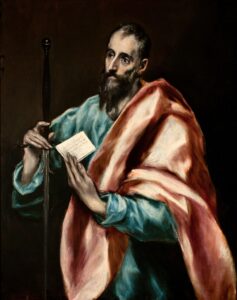
To issue the clarion call, in addition to the change in decorum – the violet vestments, the setting aside of the joyful alleluia and the Gloria – the Church has recourse to one of the more poignant passages of the writings of St Paul. The apostle has already spent a number of chapters reprimanding the Corinthians on a number of points and still has several strong messages to get across, when he reminds them of the seriousness of what he is trying to say, of the spiritual combat we are engaged in, the outcome of which will determine, not just our status in this life, but throughout all eternity.
He brings two images to bear upon this truth. One is a historical fact, namely that of all the Israelites who left Egypt, only a handful reached the Promised Land. Most of them were punished for their infidelity, and their bones were strewn across the desert. Even though they all passed through the Red Sea, which prefigures Baptism, that did not suffice to make them free inhabitants of the Promised Land, the implication being that it is not because we are baptised that our salvation is guaranteed. Being baptised and being Catholic, even going to Mass every Sunday, is, of itself, no guarantee of salvation.
The second image he brings to bear on the matter is taken from the world of athletics. When people run in a race, although there are many participants, there is only one who wins the prize. If you really want to win, you must be ready, and being ready means intensive, sustained training. To become a champion, you must endure, day after day, week after week, month after month, year after year, extremely demanding exercise sessions, muscle-building, practicing all the various movements and plays that will be required to overcome the competitors, and this not once, not twice, but hundreds of thousands of times, over and over again, until it becomes second nature. You have to give it your all over a very long period of time. During that time, your trainer will be keeping a very close eye on your diet, on how long you sleep, and on what time you get to bed and get up in the morning. He will ban quite a few foods and drinks, and certain pastimes. He will goad you on mercilessly when you think you’ve done enough. He will sometimes act as if he were your worst enemy, or so you will think, but it’s really because he wants you to win, and he knows you can’t if you don’t push yourself hard.
The apostle insists with two other observations. First, he says: I run, not aimlessly as to an uncertain goal. In other words, this is no fairy tale. It is not science fiction. This is real stuff. The competition is real, the results are real; you can’t cheat the referee and pretend to win. There is nothing uncertain or doubtful about the reality of God, of eternity, of Heaven and Hell, and of the effort that we must put into saving our souls. As the same apostle writes to the Philippians, we must work out our salvation with fear and trembling (2:12). God created us without our cooperation, but He will not save us without our serious, persevering cooperation.
The second observation is this: I fight not as if beating the air. The New American Bible proposes here a translation that is a bit stretched, but quite picturesque. It says, I am not shadow-boxing. A lot of young men go through a period where they imagine themselves as champions of something. They might go around punching the air as if they were fighting Muhammad Ali himself, convinced that if he were there, they would have the upper hand. But the fact of the matter is: if there is no intense, prolonged training, they would be like those unfortunate opponents who did not prepare well, not only with training but also with study of the man they would meet in the ring. One of them, a champion himself, was even knocked out in the first minute of the first round because he was not ready for Ali’s masterful ‘floating and stinging’.
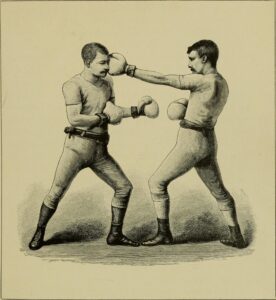
In the spiritual combat, many fit that picture. They say a few prayers now and then that make them feel good; they imagine they are doing quite well; but then comes along the enemy, in the form of, for example, a beauty walking down the street, or a link to some lewd website that appears on your screen, or the reference in conversation to a person you have a hard time getting along with, and without an effort their eyes are glued to what they should not see, or the tongue goes wagging, wounding fraternal charity. Some people go clicking their way into Hell; others go chatting their way there. They have not trained seriously; they have just been shadow-boxing, striking the air, and they lose big, often in the first round. Training for spiritual combat means not only intensive preparation; it also often means prolonged struggles for purity and charity. It’s not enough to resist the initial temptation, for the opponent keeps coming back at you. It takes stamina, and stamina requires a strong will, and in the spiritual life, a strong will requires grace, and that requires a lot of prayer.
With Lent looming on the horizon, let’s all consider carefully what St Paul is trying to get across. He could have chosen other analogies, ones that seem less extreme, but he didn’t, because he knew exactly what he was talking about. The winner of the Australian Open will get a nice big prize, a lot of money and a shining trophy. His name and picture will be in all the newspapers, and his fan club will increase. All that lasts a few years, and then he retires, and everyone forgets him and runs off after the young upstarts that will have their own hour of glory. Why would it be easier to go to Heaven than to win the Australian Open? The reward of Heaven bears no comparison. Literally none. Doesn’t it make sense that if it is so hard to become a tennis champion, it would be much harder to become a saint?
Personally, I find that it does make sense, and I know for a fact that all Catholics used to think the same way. They actually believed St Paul when he said that he, apostle though he was, needed to chastise his body and keep it in subjection in order to avoid being damned. They believed that it took great effort to merit a blessed eternity, to be admitted, not into the sports Hall of Fame, but into the very presence of the Living God, to see Him face to face and share His intimate life. They knew that no one has a right to see God, and that to miss the goal, all you have to do is let yourself float along, avoiding the hard training and workouts. This Lent, let’s make a positive resolution not to insult God by thinking we can cruise into Heaven without effort.
On the positive side, spiritual workouts demand no particular physical or intellectual talent. All they demand is a lot of patience, humility and love. Those virtues are there for the asking, and they are all found in the life of Christ. Let’s spend much time in the coming weeks pondering Our Blessed Lord, especially in the sufferings of His passion. He will teach us how to become true champions at overcoming temptation and practising virtue. His example will sustain us. Even if the enemy lands a few punches that knock us off balance, our dogged perseverance in seeking refuge under the mantle of Mary Immaculate through continual prayer and self-denial will win the day.