
Palm Sunday
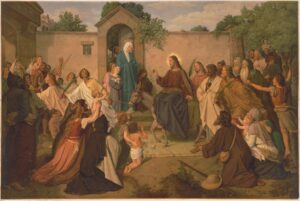
Only a very inattentive observer could fail to perceive the contrast in today’s liturgy. We began in triumph, processing with the palms of victory and the olive branches of peace and soothing mercy, singing the glory of Christ Our King with joy and jubilation. Like the Hebrews of that first Palm Sunday, we could easily be carried away into thinking that now, at last, the reign of Our Lord has come.
But then we were swiftly swept off into the darkest chapter in human history, the moment when the Incarnate Word of God, God of God, Light of Light, True God of True God, takes the plunge into the inexplicable mystery of human suffering. He drinks to the dregs that most bitter chalice of His Passion, accepting to be mistreated, misjudged, wrongfully condemned to crucifixion, that “most horrible and most cruel form of punishment”, as Cicero styled it.
From a triumphal celebration to the bitter darkness of the most intense pain. Such is the path we have walked together in this morning’s liturgy. What does it mean? We know, of course, historically, that the ancient Roman Mass of the Passion was later supplemented by the Gallican practice of the procession of Palms, both coming together to form what might at first sight seem a rather heteroclite and ill-fitting mixture of texts. In reality, it was by divine inspiration that the Roman Church decided to place these two contrasting celebrations side by side in the very same ceremony, for it holds a very great mystery for us, one upon which we would do well to meditate every day of our lives.
The mystery is that we are indeed called to glory, to joy, to celebration, to unending bliss in the radiant ecstasy of the Blessed Trinity. Only, there is a path that we must take to get there, and that path, that Way, is the Lord Jesus Christ Himself. He not only showed us the way, but He is also the way, and the closer we get to replicating that divine model, the more assured we are of taking part in His resurrection. For that is what it is about. The procession of the palms, as the texts themselves make clear, anticipates the glory of the resurrection. We must all go down deep into the mystery of suffering, for suffering alone purifies. We must all descend into the valley of humiliation. Humiliation alone makes one humble. Humility alone makes one great. Humility alone saves. Just as pride is the source of all the problems in our lives, in our families, in our communities, in the church, in society, so humility is the remedy to all those woes.
Today’s oration makes it clear that God gave His Son to us as a model of humility. By admiring Him, by contemplating Him, we learn how to deal with our own passion, our own cross. We find in His meek acceptance of pain the means to make our cross lighter. We find in His silent acquiescence to injustice the way to transform injustice into atonement for ourselves and even for those who make us suffer. How is that possible? Only by learning from the Lord’s patience, those patientiae documenta the oration refers to, the “teachings of patience” if not teachings of how to be patient and how to suffer. What is patience if not the art of accepting suffering? And so we see that the Lord, in His passion, teaches us to be patient; He teaches us to suffer.
So, my dear friends, let us, on this Palm Sunday, ask Our Lord for something that is extremely counter-cultural, but something that is capable of renewing our world, of salvaging it from disaster, as it has done many times before in other historical circumstances that were no less tragic. Let us ask the Lord to increase our capacity for suffering. I do not mean that we are to go looking for extra sufferings, but that we may be able to accept all those that come our way, to endure them without running away. The Lord did not run away from His Cross. He embraced it. He carried it. It then carried Him through Calvary to the Resurrection. The better we know how to suffer, the closer we are to the Crucified One, and the closer we are to Him, the more certain we are of the blessed resurrection.
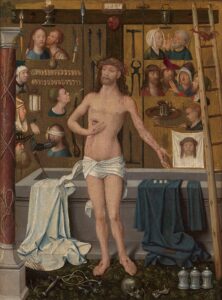
All this demands the virtue of faith. It is only faith that tells us that the man on the cross is not an unfortunate victim who happened to find himself in tragic circumstances without knowing why. In reality, it is He who is in control. St John captures it all in relaying to us some of the most touching and memorable words of the Saviour: The Good Shepherd lays down his life for his sheep…. No man takes my life from me. I lay it down of myself, and I have the power to lay it down and the power to take it up again (Jn 10). Jesus is in control. It was a death He freely accepted.
The great apostle St Paul, who did not witness the crucifixion, but was favoured with a vision of the Risen Christ, gets to the heart of what really happened on Calvary. He writes to the Galatians: He loved me and delivered Himself for me (Gal 2). May we all strive to be more and more like Christ, to get to know Him from the inside, to share His love for His Father and for souls, and may we have the grace of suffering something for Him. If that thought terrifies us, let us remember that wherever the cross is, there is Mary, our Mother, the Mediatrix of all Graces, the Second Eve, the Co-redemptrix who, at the side of Christ the only Redeemer, works together with Him. She is there to soothe the pain and pour maternal balm into the sores.
Christ, when Thou shalt call me hence, Be Thy Mother my defence, Be Thy cross my victory.