
Second Sunday of Lent
Today’s oration bears witness to that realism so characteristic of the ancient Roman liturgy: O God, who seest that we are wholly destitute of strength, keep us both inwardly and outwardly; that we may be defended in body from all adversity, and cleansed in mind from evil thoughts. Realism indeed, for the composite being that is our human nature has need to be kept in both its facets: interiorly, our soul, created in the image and likeness of God because of its three-fold power of memory, intellect and will; outwardly, our body which resembles that of other animals. All must be kept safely by the grace of God, ready for the day of the Lord, when He comes to ask us an account of our lives.
St Paul’s teaching in the First Epistle to the Thessalonians (1 Th 4:1-7) is consonant with this. He reminds us that God created us for holiness, and that holiness includes our bodies. Contrary to a number of heresies which hold either that the flesh is not important or that it is so independent of the spirit that we won’t be able to keep it in check even if we want to – both of which errors lead to the same excesses of sensual indulgence –, the Apostle tells us that our bodies are called to be holy and therefore must not be given over to impurity, to unchastity, to fornication, which here refers to all sins of the flesh.
The same lesson is presented in the Gospel of the Transfiguration (Mt 17:1-9), which reveals the lofty destiny of our bodies and strengthens us for the battle against the forces of evil. When the Lord, in His prayer on Mount Tabor, allows the glory of eternity to seep out, as it were, He is thereby inviting us to acknowledge the grandeur of what we are called to: these fragile bodies that we carry about with us, and which will one day return to dust in the grave, are destined to be resurrected at the end of time and to take part in the glory of God Himself. The Transfiguration, flowing directly from the Incarnation, is the ultimate and definitive promotion of the human body and, at the same time, the decisive condemnation of all that defiles it.
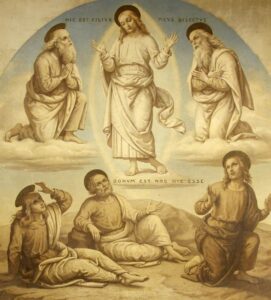
It is against the background of such a marvellous and uplifting doctrine that we must be on our guard against the hedonistic age which is ours. Under the guise of satisfying the instincts of the flesh, it ends up abusing it, using it as a commodity, thus corrupting and destroying it. Those who truly seek to glorify the human body must remember that one cannot, without dire consequences, give it precedence over the soul; let them look to Jesus transfigured. Let them find there the answer to their quest: God, more even than we, desires to immerse our nature in an ocean of ecstasy and delights, but this can only happen when we put the soul first, when we allow the soul to prosper, when we nourish it with pious and holy thoughts, when we refuse the body any self-centred gratification. When the body becomes an idol, it kills the soul, it destroys peace and joy, and it leads to a slow but inevitable disintegration of who we are.
At the same time we must add that the cult of the flesh, which our world is immersed in, is actually a cult of demons, for the self-adulation that is involved in sensual gratification is only the human replica of that diabolical turning away from God to focus on one’s self, which the fallen angels were guilty of and which they seek to insinuate into our hearts. “Become your own god, glorify yourself and make your own rules”, say the demons, and in so doing, cunningly lead to the alienation of our true grandeur. That is why the saints mortified their flesh, and it is why Holy Mother Church urges us to practice self-denial and fasting, knowing that by so doing, we safeguard the flesh and prepare it to achieve its final destiny. If you want your body to take part in the glory of Heaven, you must keep it in check, submitting it to the higher values of reason, of self-denial, of holiness.
Saint Benedict’s teaching on chastity is brief and to the point. He tells us to Love Chastity, Castitatem amare (Rule, ch. 4). To love means to want, and to want means to have esteem for. It’s not hard to esteem chastity when we consider its advantages, as well as the nefarious results of unchastity. While chastity facilitates growth in all the virtues, unchastity stunts that growth and, if unchecked, contaminates and destroys them. Chastity opens the door to divine intimacy; unchastity closes that door and attracts evil spirits. Chastity radiates supernatural peace; unchastity causes disquiet, trouble, and sadness. Chastity is its own reward in that it disposes the soul for familiar and continuous communion with God; unchastity is its own punishment in that it weighs the soul down and makes it, like brute animals, insensible to spiritual joys; it infects the will with weakness, pollutes the memory, and darkens the imagination. Even the body is affected adversely by unchastity; it gives rise to bodily dysfunctions, fatigue, and restlessness. Unchastity weakens the body’s resistance to illness by strengthening the soul’s collusion with sin. Ultimately, unchastity foments unbelief, despair, and hatred of God.
To set out on the path of chastity is to set out on the path of joy that leads to the ineffable sweetness of union with God. The chaste soul holds fast to Our Lord’s words, the truth shall set you free (Jn 8:32); unchastity produces an aversion to and a contempt for the truth that causes the soul to repulse it. Chastity flourishes in the light and turns to it like the sunflower to the sun; unchastity darkens the mind and causes the soul to prefer the cover of darkness to the light of truth. This is why unchastity always goes hand-in-hand with the vice of lying; unchastity finds it necessary to spin a web of lies around itself; it thrives in the climate provided by error, lying, and deceit. Chastity delights in what is beautiful and pursues what is good. It generates a climate of joy in which the other fruits of the Holy Ghost thrive and abound.
To be strong and persevering in chastity, we must keep watch over our senses, especially our eyes; we must also be on our guard against the infection of false doctrines, avoid bad company, keep a guard over our heart and our thoughts; we must be fervent in our fasting and self-denial. Above all, we must contemplate the chaste beauty of our beloved Saviour’s transfigured humanity. Looking at ourselves will not get us anywhere but into sadness and despair. Let us look up to Jesus and to the light of His face.
To achieve this, frequent meditation is required, as the offertory verse will remind us: I will meditate on Thy commandments, which I have loved exceedingly: and will lift up my hands to Thy commandments, which I have loved (Psalm 118:47-48). And so we see that in the end, it is only love, true love, that allows us to leave ourselves behind, and in so doing, mysteriously, to find ourselves. Seek yourself, and you will find yourself, and only yourself, for your own ruin. Renounce yourself, leave all, and you will find all. For it is only by leaving himself that man finds himself. It is only by going out of himself that he finds his true and everlasting home.
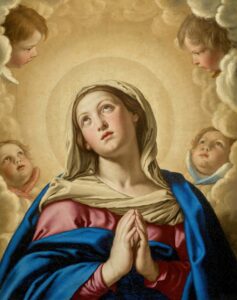
Let us also turn frequently to the one we lovingly call the Virgin of virgins and our Mother most pure and place ourselves under her immaculate mantle. On this first day of the month of St Joseph, we are reminded of the magnificent prayer to St Joseph, the father and guardian of virgins, in which we ask for the grace of perfect chastity. St Joseph was so chaste that he was chosen to be the Guardian of the Blessed Virgin, to live in her intimacy, to be the witness to her purity. It is because of this purity that he is called the Terror of Demons. May he ever keep us close to Jesus and Mary, protect us inwardly and outwardly, and lead us to everlasting life.